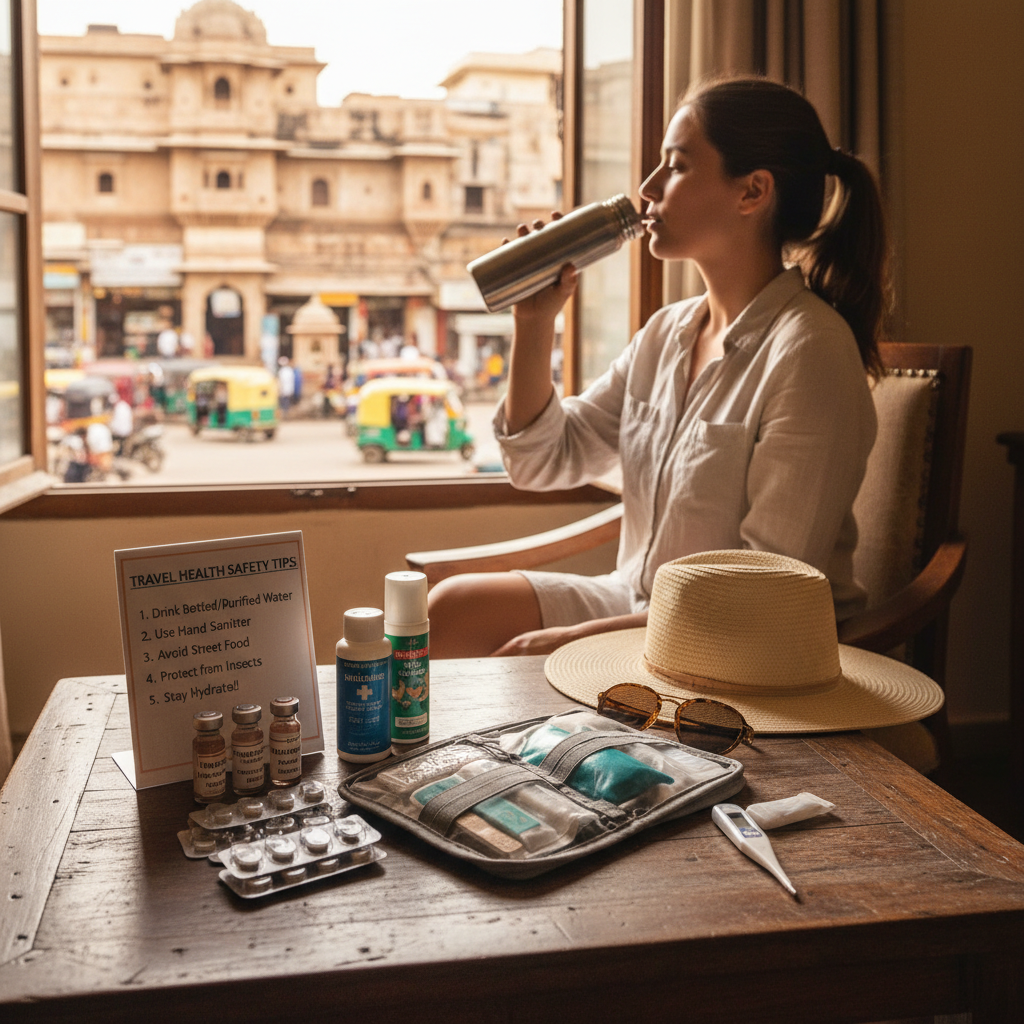
Travel health kit safety equipment India

With the right preparation, India is a safe and rewarding destination for millions of travellers every year. The key is to prepare properly before leaving home, follow sensible precautions during your trip, and know what to do if things go wrong. This guide covers everything you need to stay healthy and safe throughout your India journey.

1. Pre-Travel Health Preparation

Visit your doctor or a travel health clinic at least 4–8 weeks before departure to allow time for vaccinations to take effect:

Recommended Vaccinations

  • Hepatitis A — strongly recommended for all
  • Hepatitis B — recommended, especially for longer stays
  • Typhoid — highly recommended for all travellers
  • Tetanus/Diphtheria — ensure up to date
  • Rabies — for rural/animal-contact travellers
  • Japanese Encephalitis — for rural/monsoon season travel
  • Yellow Fever — only if arriving from endemic country

Malaria Prevention

  • Malaria is present in rural India and some cities
  • Consult your doctor about antimalarial tablets
  • Common options: Doxycycline, Malarone, Mefloquine
  • Use DEET-based mosquito repellent
  • Sleep under mosquito nets in rural areas
  • Cover arms and legs at dusk and dawn

2. Food & Water Safety

"Delhi belly" (traveller's diarrhoea) is one of the most common health issues for visitors to India. These precautions significantly reduce your risk:

  • NEVER drink tap water — always use sealed bottled water
  • Avoid ice unless you're certain it's from purified water (most upscale hotels confirm this)
  • Carry a water purification bottle or tablets as backup
  • Use bottled water for brushing teeth
  • Be cautious with fresh juices and ice cream from street vendors

  • Choose freshly cooked, piping hot food over pre-cooked or reheated
  • Avoid raw salads at street stalls (washed in tap water)
  • Peel all fruit yourself before eating
  • Busy stalls = higher turnover = fresher food = generally safer
  • Your gut needs time to adapt — start gently for the first 2–3 days

If you do get sick: stay hydrated with ORS (oral rehydration salts) and sealed bottled water. Rest and eat plain foods — rice, toast, bananas. Imodium can help for short-term control. If symptoms are severe, involve blood, or last more than 48 hours, seek medical attention immediately. India has good-quality medical facilities in major cities.

3. Sun & Heat Safety

  • India's sun is intense — use SPF 50+ sunscreen and reapply every 2 hours
  • Drink 3–4 litres of water daily — dehydration happens faster than you expect
  • Wear a wide hat, sunglasses and loose, breathable clothing
  • Avoid outdoor sightseeing between 12:00–15:00 during hot months (March–June)
  • Heat exhaustion symptoms: heavy sweating, dizziness, nausea — move to shade, cool down, hydrate immediately

4. Personal Safety

Safety Dos

  • Keep photocopies of passport/visa separate from originals
  • Use hotel safe for valuables and excess cash
  • Use official pre-paid taxi stands at airports
  • Share your itinerary with someone at home
  • Keep emergency numbers saved on your phone
  • Use Ola/Uber apps rather than hailing random taxis

Safety Don'ts

  • Don't flash expensive jewellery, cameras or large amounts of cash
  • Don't accept food, drink or cigarettes from strangers
  • Don't walk alone late at night in unfamiliar areas
  • Don't leave drinks unattended
  • Don't charge devices on public USB charging points
  • Don't share hotel room details with strangers

5. Travel Insurance — Essential

Why You Need Travel Insurance for India

Travel insurance is not optional for India — it is essential. Your policy must include:

  • Medical evacuation coverage — costs can reach $50,000+ without insurance
  • Emergency medical treatment (India has world-class private hospitals but they're expensive)
  • Trip cancellation and interruption cover
  • Lost or stolen luggage
  • Adventure activities if applicable (trekking, rafting, etc.)
  • If visiting at altitude (Himalayan tours), ensure high-altitude coverage is included

6. Emergency Contacts in India

ServiceNumber
Police Emergency100
Fire Emergency101
Ambulance102 / 108
Tourist Helpline1800-11-1363
All Emergency Services112
Women's Helpline1091
Your Embassy in IndiaLook up before travel

Health Checklist

Before departure:

  • ✔ Hepatitis A vaccination
  • ✔ Typhoid vaccination
  • ✔ Tetanus up to date
  • ✔ Antimalarial tablets prescribed
  • ✔ Travel insurance with medevac
  • ✔ ORS sachets packed
  • ✔ Imodium and antibiotics
  • ✔ DEET insect repellent
  • ✔ SPF 50+ sunscreen

Emergency numbers saved:

  • Police: 100
  • Ambulance: 102 / 108
  • All Emergency: 112
  • Your embassy in India

Safe Travel With Our Guides

Our expert guides ensure your safety on every tour. We partner with reputable medical facilities and carry first aid on all journeys.

View Our Tours

More India Travel Tips