India's most magnificent monuments, ancient ruins and UNESCO World Heritage Sites
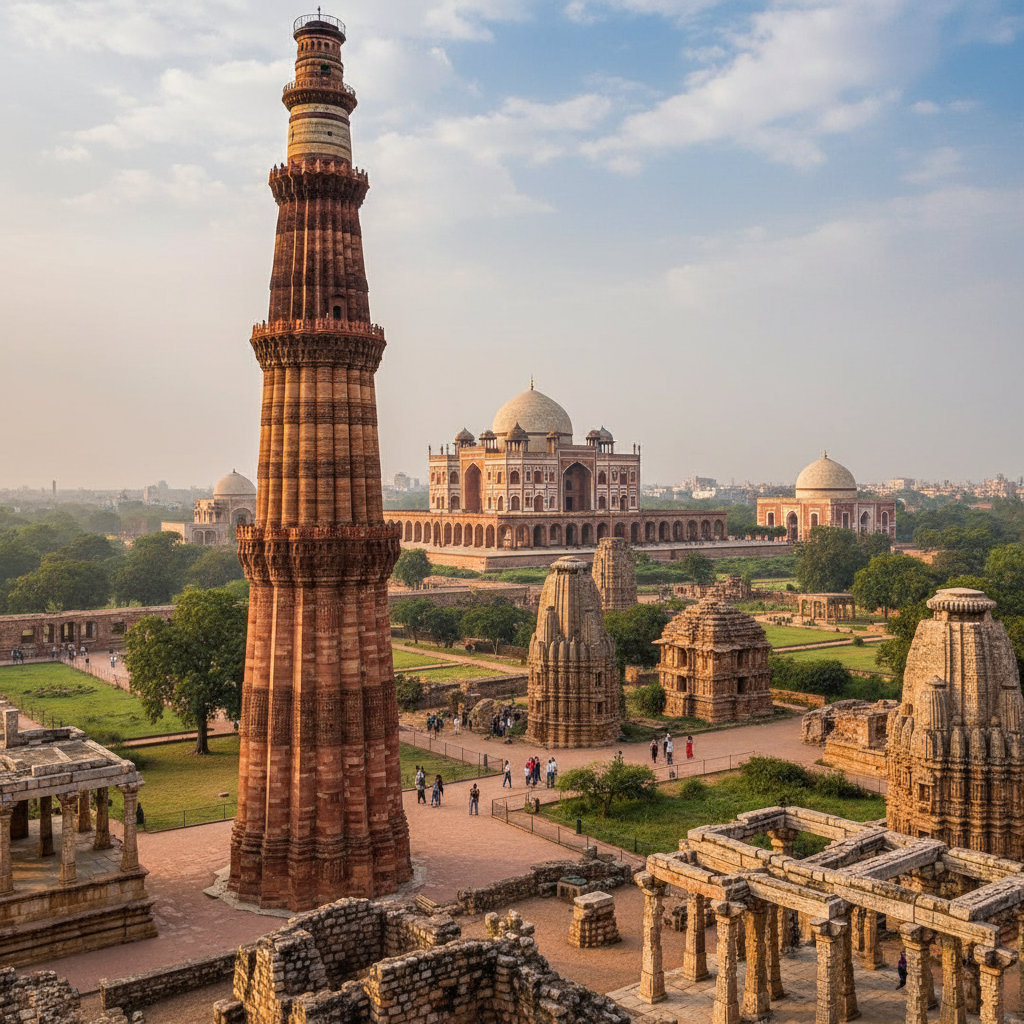
India is home to 40 UNESCO World Heritage Sites — more than almost any other country on Earth. From the iconic Taj Mahal to the ancient rock-cut temples of Ajanta and Ellora, the medieval ruins of Hampi and the medieval forts of Rajasthan, India's historical landscape is breathtaking in its depth, diversity and scale. This guide highlights the sites every history lover should visit.
The most iconic building on Earth. Built by Mughal Emperor Shah Jahan in memory of his beloved wife Mumtaz Mahal (1632–1653), the Taj Mahal is a masterpiece of Mughal architecture — and arguably the world's greatest monument to love.
The tallest brick minaret in the world at 72.5 metres, built in 1193 CE. The Qutub Minar complex is one of India's earliest examples of Indo-Islamic architecture, with intricate calligraphy and geometric designs carved throughout.
Two extraordinary rock-cut cave complexes near Aurangabad, Maharashtra — among the most remarkable artistic achievements in the ancient world.
30 Buddhist caves (2nd century BCE – 6th century CE) containing spectacular frescoes and sculptures. The paintings depicting the life of the Buddha are among the finest surviving examples of ancient Indian art.
34 caves (6th–11th century CE): 12 Buddhist, 17 Hindu and 5 Jain — remarkable religious coexistence. The Kailasa Temple (Cave 16) — carved from a single rock — is the world's largest rock-cut monument.
The ruins of Vijayanagara — once one of the world's largest cities (14th–16th century) — spread across a dramatic boulder-strewn landscape in Karnataka. Hampi's Virupaksha Temple, royal enclosure, elephant stables and stone chariot are among India's most extraordinary historical sites.
The Khajuraho temples (10th–11th century CE) are celebrated for their extraordinary erotic sculptures — but equally remarkable for their overall artistic achievement. These Chandela dynasty temples represent the pinnacle of medieval Indian temple architecture.
| Site | Location | Highlights |
|---|---|---|
| Humayun's Tomb (UNESCO) | Delhi | Mughal predecessor to the Taj Mahal — stunning Persian architecture |
| Red Fort (UNESCO) | Delhi | Symbol of Mughal power, India's Independence Day venue |
| Amber Fort | Jaipur | Hilltop Rajput palace with stunning views over Jaipur |
| Mehrangarh Fort | Jodhpur | One of India's most imposing forts, dominates the Blue City |
| Fatehpur Sikri (UNESCO) | Agra | Perfectly preserved Mughal ghost city, built and abandoned 1571 |
| Mahabodhi Temple (UNESCO) | Bodh Gaya | Site of Buddha's enlightenment — most sacred Buddhist site in India |
| Shore Temple (UNESCO) | Mahabalipuram | 7th-century Pallava Dynasty temple on the Bay of Bengal |
India has 40 UNESCO World Heritage Sites — the 6th most in the world. Our tours cover many of them:
Our Mystical Northern India and Cultural Rajasthan tours cover the most iconic historical sites.
Northern India Tour Rajasthan Tour